
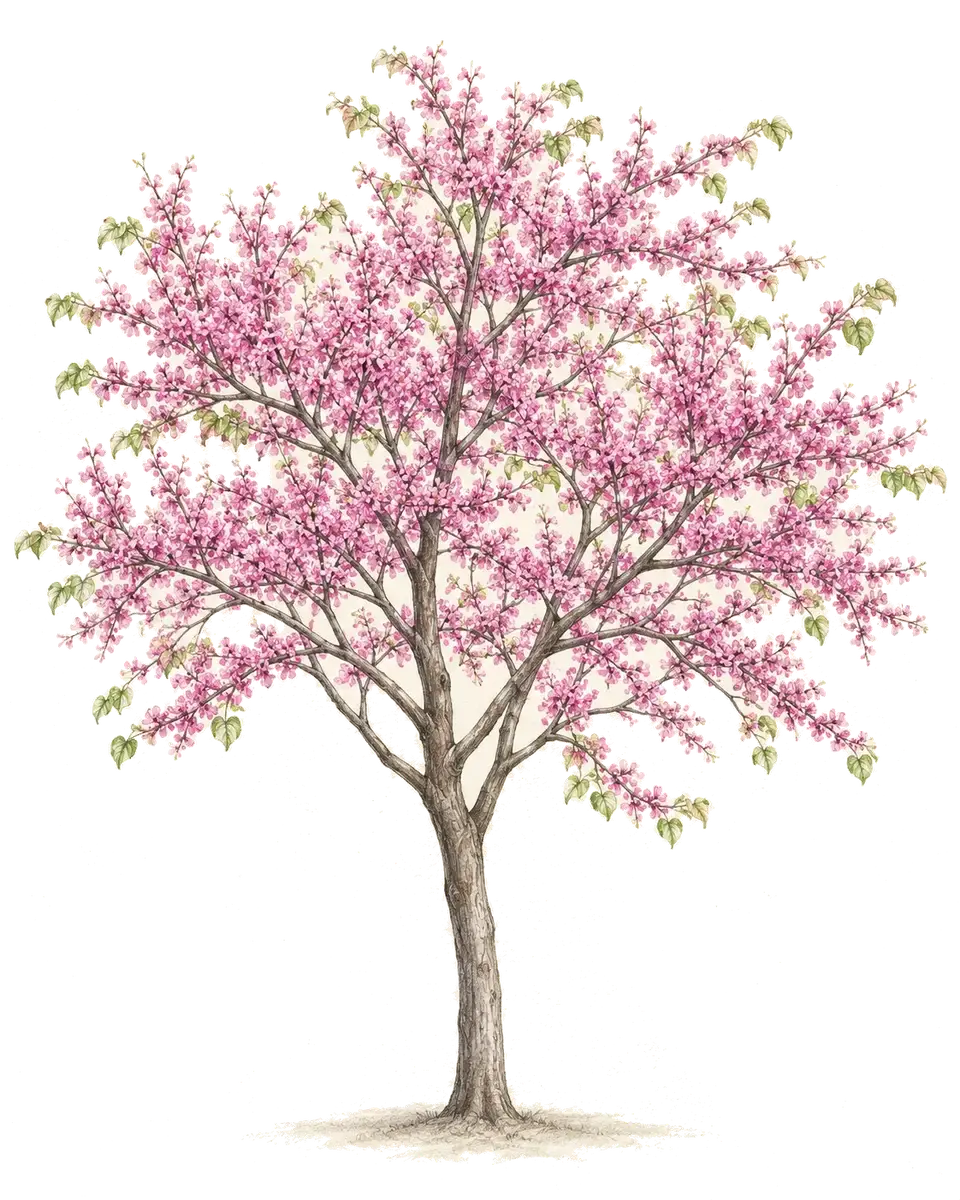
Eastern Redbud is a graceful ornamental tree that welcomes spring with rosy-pink flowers along its bare branches. Heart-shaped foliage and a broad, rounded canopy make it an eye-catching choice for residential landscapes and pollinator gardens.
- Ornamental Tree
Cercis canadensis
Eastern Redbud
Statement Plant
Pollinator FriendlyMulti-Season Blooms
Low Maintenance
Your Eastern Redbud Care Guide
Rosy Magenta PinkBold & expressiveMoss GreenNatural & groundedSoft Straw GoldLight & warm
SUNLIGHT
Sun to Partial Shade
WATER NEEDS
Regular Watering
MATURE SIZE
Height: 20–30ft
Spread: 25–35ft
BLOOM TIME
Early to mid-spring
MAINTENANCE
Low
NATIVITY
Native to the Midwest
CLIMATE COMPATIBILITY
Well suited to southeastern Wisconsin
BLOOM SCHEDULE
Fall Color, Spring Blooms

About Eastern Redbud
Eastern Redbud is one of those trees that can change the mood of a yard in a matter of days. In early spring, rosy-pink flowers appear right along the bare branches, so the whole tree seems to glow before most of the landscape has fully woken up. Once the flowers fade, heart-shaped leaves take over and give the canopy a softer, more relaxed look for summer.
Its size is another reason homeowners love it. Redbud feels substantial enough to be a real focal point, but it does not have the heavy presence of a giant shade tree. That makes it especially useful near patios, front walks, mixed planting beds, or anywhere you want a tree to feel welcoming rather than overwhelming. Give it a spot where the branching can be seen, and the spring show becomes even more memorable.
Cercis canadensis
Let's Find a Place for Eastern Redbud in Your Landscape
You’ve found a plant you like. That’s wonderful! Now, let’s consider the light, space, and surroundings that will help it look its best in your landscape.
Proper Installation steps:
Place this tree toward the back of a broad bed or along an open woodland edge, leaving room for a canopy roughly 25–35 feet across. Choose sun or light shade with moist soil that drains well, and use northern-grown stock suited to Wisconsin. Establish its permanent position while young rather than planning to move it later.
DESIGN PROFILE
AT A GLANCE
Rosy Magenta PinkBold & expressive — #C85F8FMedium Leaf GreenBalanced & natural — #5E7A48Clear Fall YellowClear & luminous — #D4B94F
Color Character
Rosy-pink to purple-pink spring flowers; medium green heart-shaped foliage; yellow fall tones
Helpful plant tip
Let redbud’s spreading crown frame one side of a garden view, with open space beside it. This off-center arrangement draws attention into the garden beyond the tree.

Growth Form
Rounded to broadly spreading; often multi-trunked with graceful branching
Designer's Note
Place Eastern Redbud where you can actually enjoy that early-spring silhouette—near a front approach, patio view, or open lawn edge. Keep the plants beneath it lower and simpler so the rosy flowers and graceful branching do not disappear into a crowded bed.
Where This Plant Works Best
Where you plant it matters just as much as what you plant. Here are a few placements where it tends to do its best work.

Focal Points
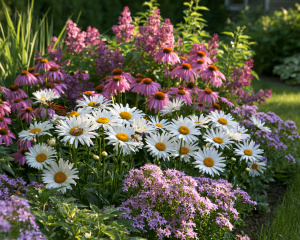
Pollinator Gardens
Eastern Redbud Overview
The growing conditions and maintenance needed to keep it healthy and vibrant.
Soil & Drainage
Moist, Well-Drained Soil, Adaptable to a Range of Soils, Well-Drained Soil, Tolerates Alkaline Soil, Clay-Soil Tolerant, Avoid Standing Water
Pruning & Seasonal Care
Give a young Eastern Redbud a little thoughtful structure early and it will reward you later. Prune young trees to encourage well-spaced branches and strong branch angles, then keep mature pruning light and focused on damaged, crossing, or poorly positioned growth. A mulch ring helps preserve root-zone moisture, but keep mulch pulled away from the trunk itself.
Watering & Moisture
Keep newly planted redbuds consistently moist while their root systems establish, especially through their first few Wisconsin summers. Once established, they can handle occasional dry spells, but they look and perform best with regular moisture during prolonged heat or drought. Deep, well-drained soil is far preferable to a site that stays soggy.
Winter Resilience
Very Good Winter Resilience
Plant Strength
Moderate Structural Resilience
Better Together
Complete your landscape design by adding compatible natural accents and neighboring foliage to enhance this plant’s colors and textures.
Pair It With
Hand-selected companion plantings that tie in well and add cohesive dimension.


Complementary Elements
Natural landscape finishes that pair well with this plant and bring harmony to your design.

Natural Wood Mulch

Dark Organic Mulch

Light Gravel

Gray Gravel

Gray Pavers

Warm Beige / Tan Pavers