
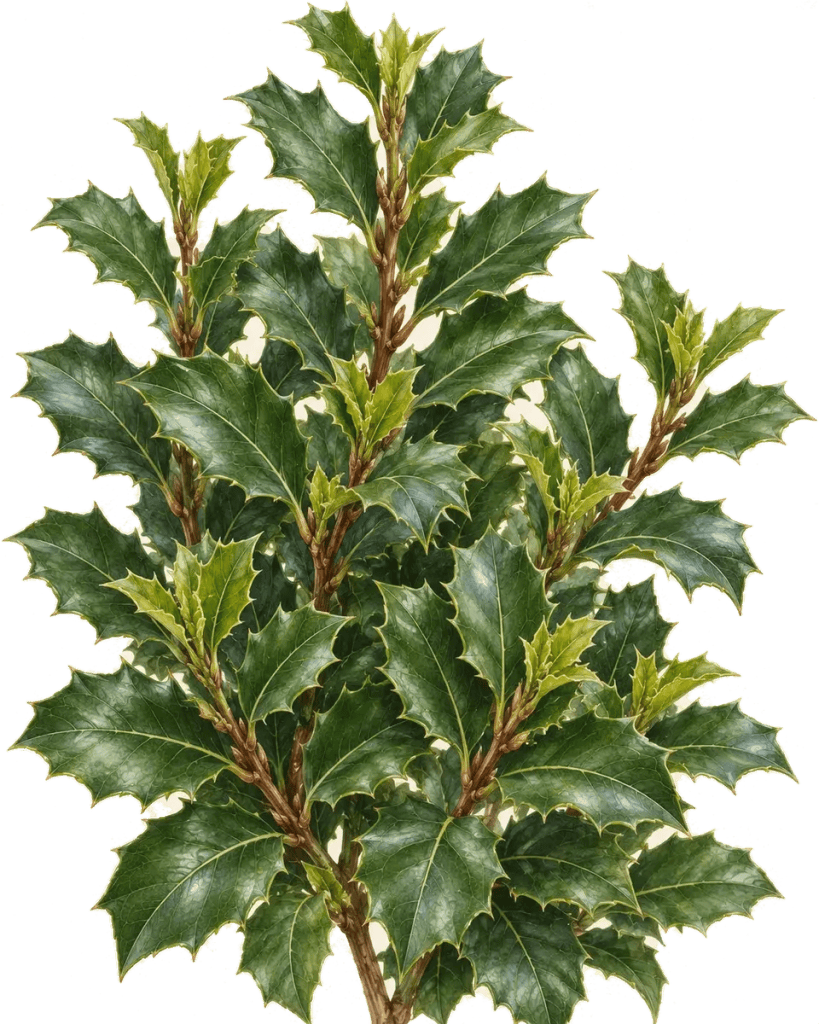
Scallywag® Holly is a compact male blue holly with dense, glossy dark-green foliage that takes on burgundy-purple tones in cold weather. Its upright rounded form delivers year-round structure without producing berries.
- Evergreen Shrub
Ilex × meserveae 'Monnieves'
Scallywag® Holly
Disease ResistantMulti-Season Blooms
Low Maintenance
Your Scallywag® Holly Care Guide
Deep EvergreenDeep & calmingBurgundy PlumRich & moodyMeadow GreenEasy & natural
SUNLIGHT
Sun to Partial Shade
WATER NEEDS
Regular Watering
MATURE SIZE
Height: 3–4ft
Spread: 3–4ft
BLOOM TIME
Late spring; small inconspicuous male flowers
MAINTENANCE
Low
NATIVITY
Hybrid or Mixed Origin
CLIMATE COMPATIBILITY
Well suited to southeastern Wisconsin
BLOOM SCHEDULE
Winter Beauty, Year-Round Greenery
About Scallywag® Holly
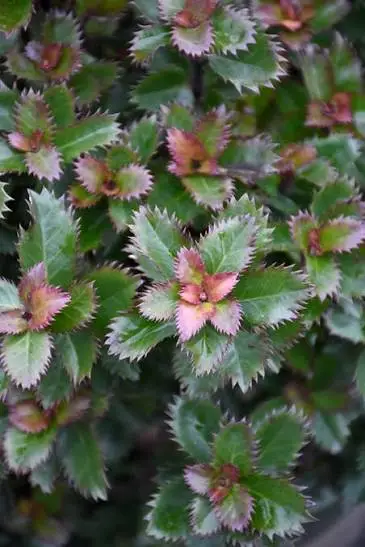
Scallywag® Holly is a compact evergreen with a darker, moodier personality than the typical bright green foundation shrub. Through spring and summer, its glossy leaves create a dense green mound. As the weather cools, those leaves can pick up purple and burgundy tones that make the shrub feel completely different heading into winter.
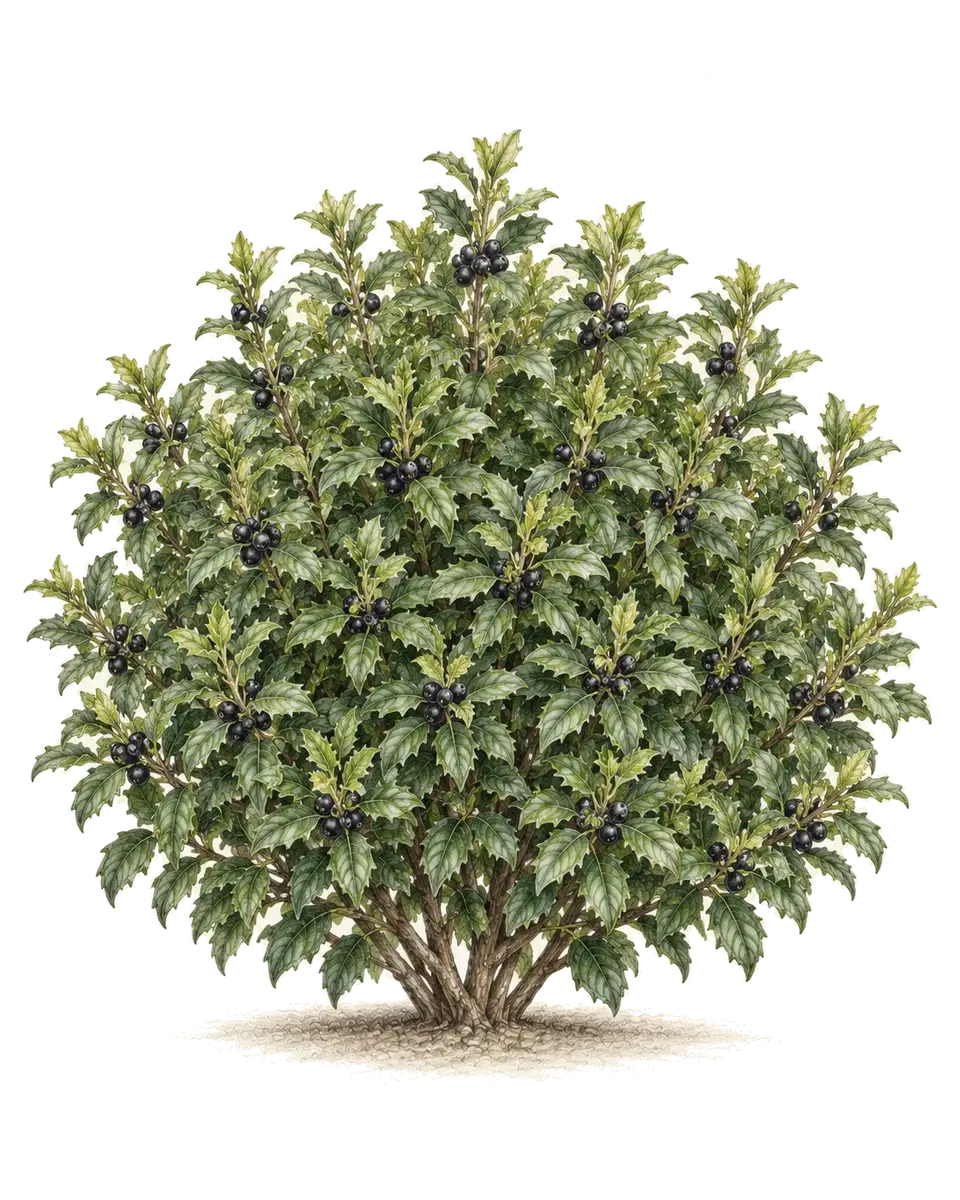
One thing homeowners should know is that Scallywag® is a male holly, so it does not produce the red berries people often picture when they hear the word holly. The foliage is the feature here, and it has plenty to offer on its own. Its smaller rounded shape makes it useful beneath windows, along walks, or mixed with flowering shrubs. When the rest of the bed quiets down for winter, Scallywag® keeps both its leaves and its personality.
Ilex × meserveae 'Monnieves'
Let's Find a Place for Scallywag® Holly in Your Landscape
You’ve found a plant you like. That’s wonderful! Now, let’s consider the light, space, and surroundings that will help it look its best in your landscape.
Proper Installation steps:
Place Scallywag as a compact evergreen accent or short repeated group in a sunny, sheltered bed, allowing roughly 3 feet of width per plant. Choose moist, well-drained soil and check soil pH before using it in an alkaline foundation bed. Avoid making an exposed, wind-swept corner its default location.
DESIGN PROFILE
AT A GLANCE
Glossy Dark GreenDeep & refined — #2F5136Purple BurgundyRich & moody — #60364DFresh Growth GreenLight & fresh — #718A52
Color Character
Glossy dark green evergreen foliage developing purple-burgundy tones in cool weather
Helpful plant tip
Use Scallywag as a slightly taller endpoint to a run of lower evergreen mounds. Its upright habit gives the eye a clear stopping point within the planting.
Growth Form
Compact, dense and naturally rounded evergreen mound
Designer's Note
Use Scallywag® where its dark evergreen foliage can anchor lighter flowers and softer textures. Pale hydrangeas, ornamental grasses, and chartreuse foliage look especially good nearby, and the burgundy winter color adds another layer after the flowers are gone.
Where This Plant Works Best
Where you plant it matters just as much as what you plant. Here are a few placements where it tends to do its best work.

Foundation Plantings

Borders & Edging

Hedges & Privacy Screens
Mass Plantings
Scallywag® Holly Overview
The growing conditions and maintenance needed to keep it healthy and vibrant.
Soil & Drainage
Moist, Well-Drained Soil, Prefers Acidic Soil, Well-Drained Soil, Avoid Standing Water
Pruning & Seasonal Care
Its compact habit requires little pruning. Lightly shape in early spring or remove stray growth as needed, but avoid constant shearing that hides the naturally handsome texture. Mulch helps stabilize root-zone moisture, and a protected location reduces winter drying.
Watering & Moisture
Keep soil evenly moist while Scallywag establishes and provide supplemental water during extended drought. Good drainage is essential, but broadleaf evergreens should also enter a Wisconsin winter well hydrated because their foliage continues losing moisture even while the ground is frozen.
Winter Resilience
Good with Proper Siting
Plant Strength
Sturdy Structure
Better Together
Complete your landscape design by adding compatible natural accents and neighboring foliage to enhance this plant’s colors and textures.
Pair It With
Hand-selected companion plantings that tie in well and add cohesive dimension.


Complementary Elements
Natural landscape finishes that pair well with this plant and bring harmony to your design.

Natural Wood Mulch

Dark Organic Mulch

Light Gravel

Gray Gravel

Gray Pavers

Warm Beige / Tan Pavers