
Bird’s Nest Spruce is a slow-growing dwarf conifer with dense horizontal branches and a characteristic depression at the center. Its fresh green needles and broad, low mound bring dependable year-round structure to foundations, borders, and small spaces.
- Evergreen Shrub
Picea abies 'Nidiformis'
Bird’s Nest Spruce
Low Maintenance
Deer Resistant
Drought Tolerant
Adaptable
Your Bird’s Nest Spruce Care Guide
Forest GreenRich & groundingMeadow GreenEasy & natural
SUNLIGHT
Sun to Partial Shade
WATER NEEDS
Occasional Watering
MATURE SIZE
Height: 3–5ft
Spread: 4–6ft
BLOOM TIME
Not grown for flowers
MAINTENANCE
Very Low
NATIVITY
Non-Native
CLIMATE COMPATIBILITY
Well suited to southeastern Wisconsin
BLOOM SCHEDULE
Winter Beauty, Year-Round Greenery
About Bird’s Nest Spruce
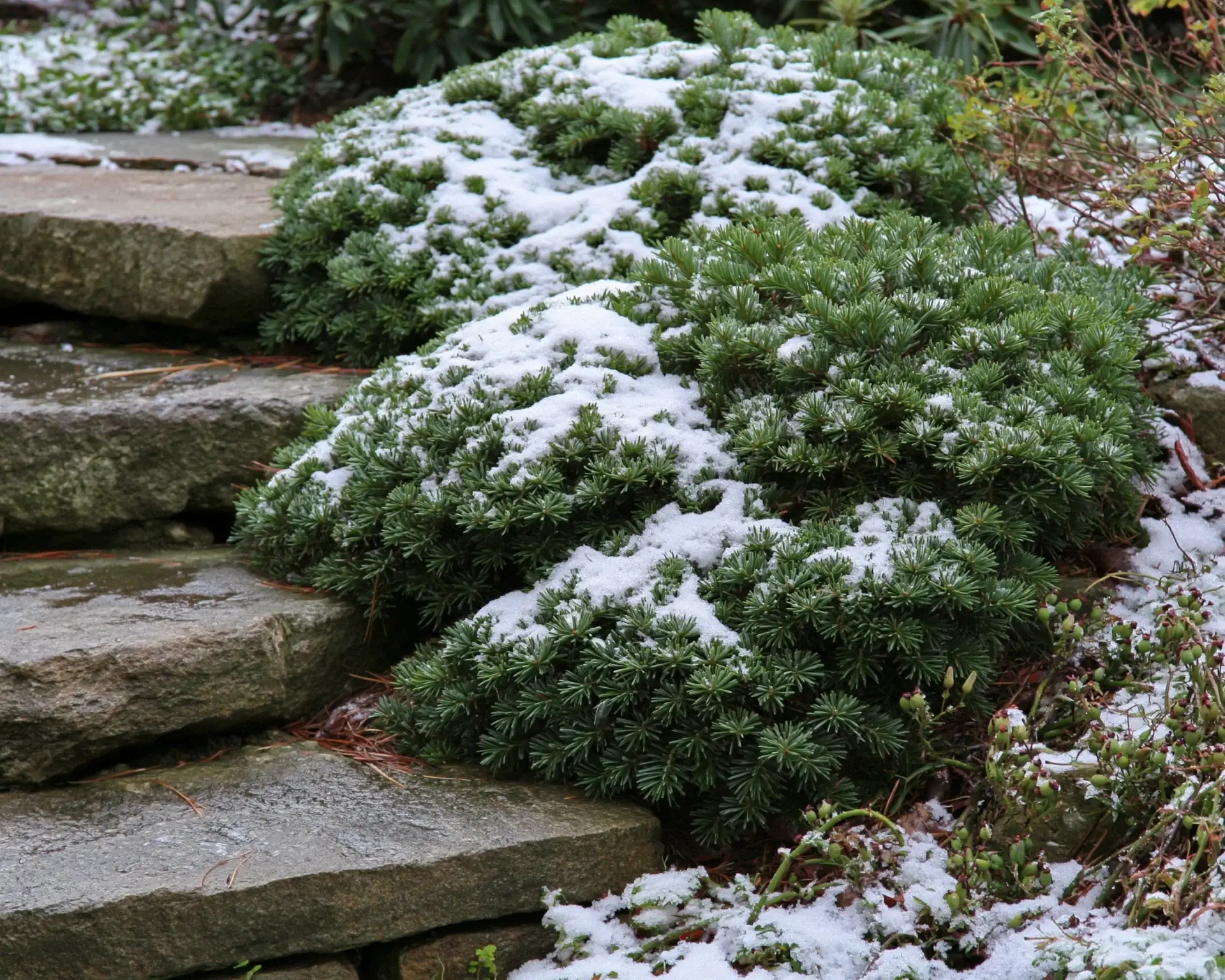
Bird’s Nest Spruce is a slow-growing evergreen that earns its place by being dependable. Its branches spread outward into a broad, low mound, while a small depression through the center creates the nest-like shape behind its name. The rich green needles stay in place all year, giving the landscape something solid to look at after flowers fade and deciduous shrubs lose their leaves.
It is often sold as a dwarf spruce, but dwarf does not mean tiny forever. Bird’s Nest Spruce grows slowly and can become quite broad with age, so giving it enough room from the beginning helps it age gracefully instead of becoming crowded. In a mixed planting, it works like a steady green anchor: quiet in summer, surprisingly valuable in winter, and always there to hold the bed together.
Picea abies 'Nidiformis'
Let's Find a Place for Bird’s Nest Spruce in Your Landscape
You’ve found a plant you like. That’s wonderful! Now, let’s consider the light, space, and surroundings that will help it look its best in your landscape.
Proper Installation steps:
Place this dwarf evergreen shrub in a broad, sunny bed where its low branches can spread without reaching a walkway. Leave substantial room around it rather than fitting it into a narrow foundation strip; old plants can become much wider than their early dimensions suggest. Choose moderately moist soil with good drainage.
DESIGN PROFILE
AT A GLANCE
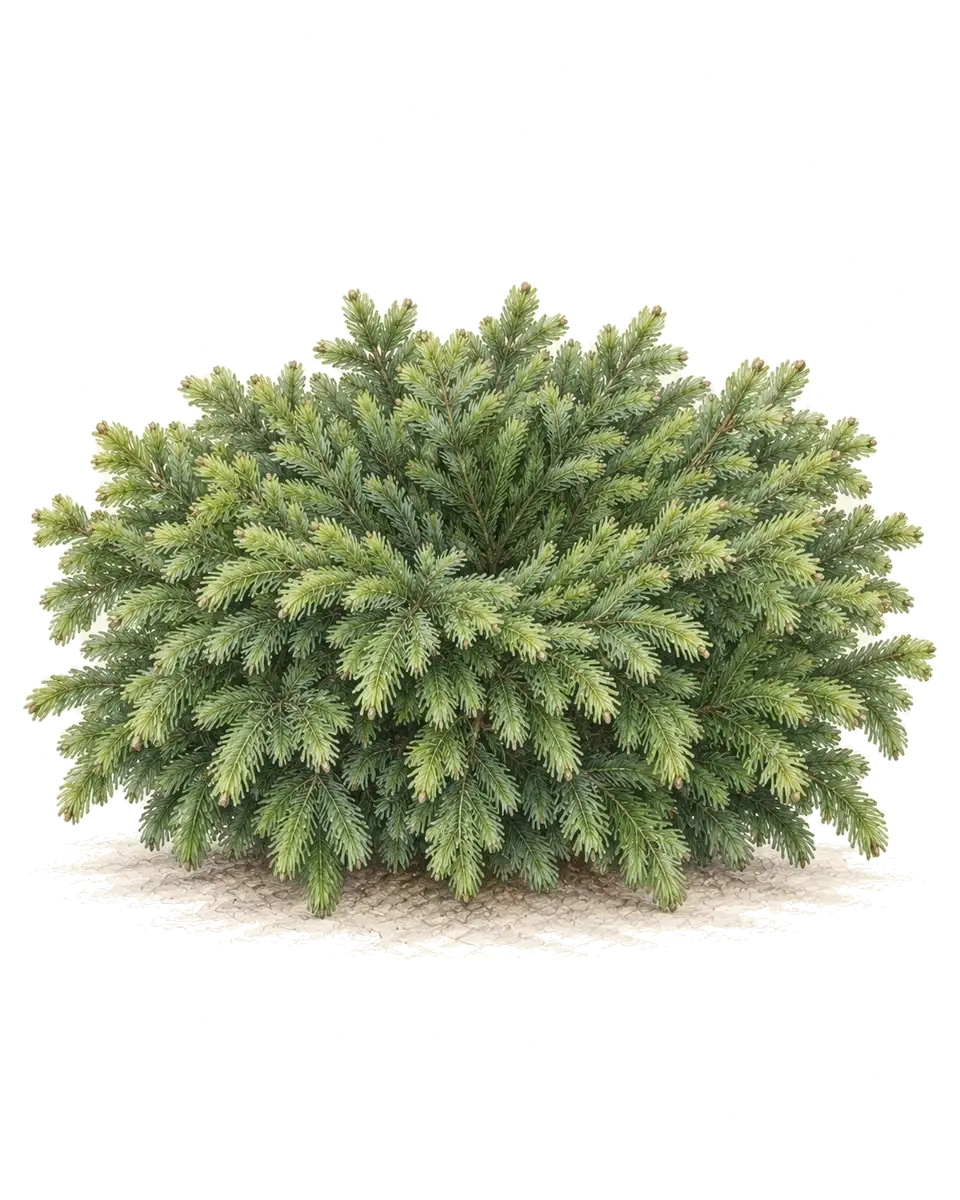
Deep Spruce GreenDeep & grounding — #385B3EFresh Growth GreenLight & fresh — #708A50
Color Character
Dense medium to deep green evergreen needles; fresh growth slightly brighter green
Helpful plant tip
Choose a view slightly above Bird’s Nest Spruce, such as from porch steps or a raised patio. Looking down reveals its nest-shaped center, a detail easily missed from ground level.

Growth Form
Low, broad and densely mounded with a characteristic depressed center
Designer's Note
Use Bird’s Nest Spruce at bed corners, along broad walkways, or among flowering shrubs that disappear visually in winter. Its rounded evergreen shape looks especially good beside upright grasses, hydrangeas, and looser perennials.
Where This Plant Works Best
Where you plant it matters just as much as what you plant. Here are a few placements where it tends to do its best work.

Foundation Plantings

Borders & Edging
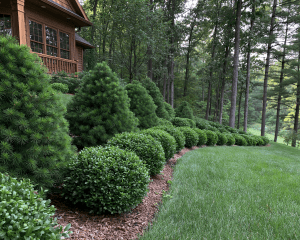
Mass Plantings
Bird’s Nest Spruce Overview
The growing conditions and maintenance needed to keep it healthy and vibrant.
Soil & Drainage
Moist, Well-Drained Soil, Well-Drained Soil, Prefers Acidic Soil, Sandy-Soil Tolerant, Avoid Standing Water
Pruning & Seasonal Care
Bird's Nest Spruce is naturally tidy and usually needs almost no formal pruning. If shaping is necessary, keep it light and work with the plant's natural mounded form rather than cutting deeply into old bare wood. Mulch helps protect its shallow roots from temperature and moisture swings.
Watering & Moisture
Water consistently while this shallow-rooted spruce establishes, then supplement during prolonged heat or drought. Established plants tolerate some dryness, but they perform best when the root zone stays moderately moist without becoming waterlogged.
Winter Resilience
Excellent Winter Resilience
Plant Strength
Sturdy Structure
Better Together
Complete your landscape design by adding compatible natural accents and neighboring foliage to enhance this plant’s colors and textures.
Pair It With
Hand-selected companion plantings that tie in well and add cohesive dimension.


Complementary Elements
Natural landscape finishes that pair well with this plant and bring harmony to your design.

Natural Wood Mulch

Dark Organic Mulch

Light Gravel

Gray Gravel

Gray Pavers

Warm Beige / Tan Pavers